

Peloton’s Turnaround Playbook: Marketing, Gyms, and the Future of Fitness
Peloton reported earnings again last week, and the story barely changed from the last time I wrote about them. Revenue beat expectations. Losses did too. Investors shrugged and moved on. Same shit, different toilet.
The core problem isn’t getting people to try Peloton. That part’s always been easy. The problem is converting trials into real commitment. A free month is fun. A subscription is a lifestyle. Peloton still struggles to bridge that gap.
So the real question is, how do you take a company that once defined pandemic fitness culture and turn it into a sustainable business with long-term retention?
To get there, you have to break the business down in pieces.
1. Peloton’s business today
The funny thing is a lot of Peloton’s recent moves actually make sense.
They hired Leslie Berland, the former CMO of Twitter. And you could see the shift right away. They got rid of the surreal penthouse ads with massive windows, tastefully expensive sofas, and a golden retriever placed like a West Elm prop. They replaced it with garages, cramped corners, bikes shoved next to laundry machines, people sweating between Zoom calls. They finally decided to cater to the common person.

It might seem less aspirational, but Peloton messed up years ago by selling a false dream.
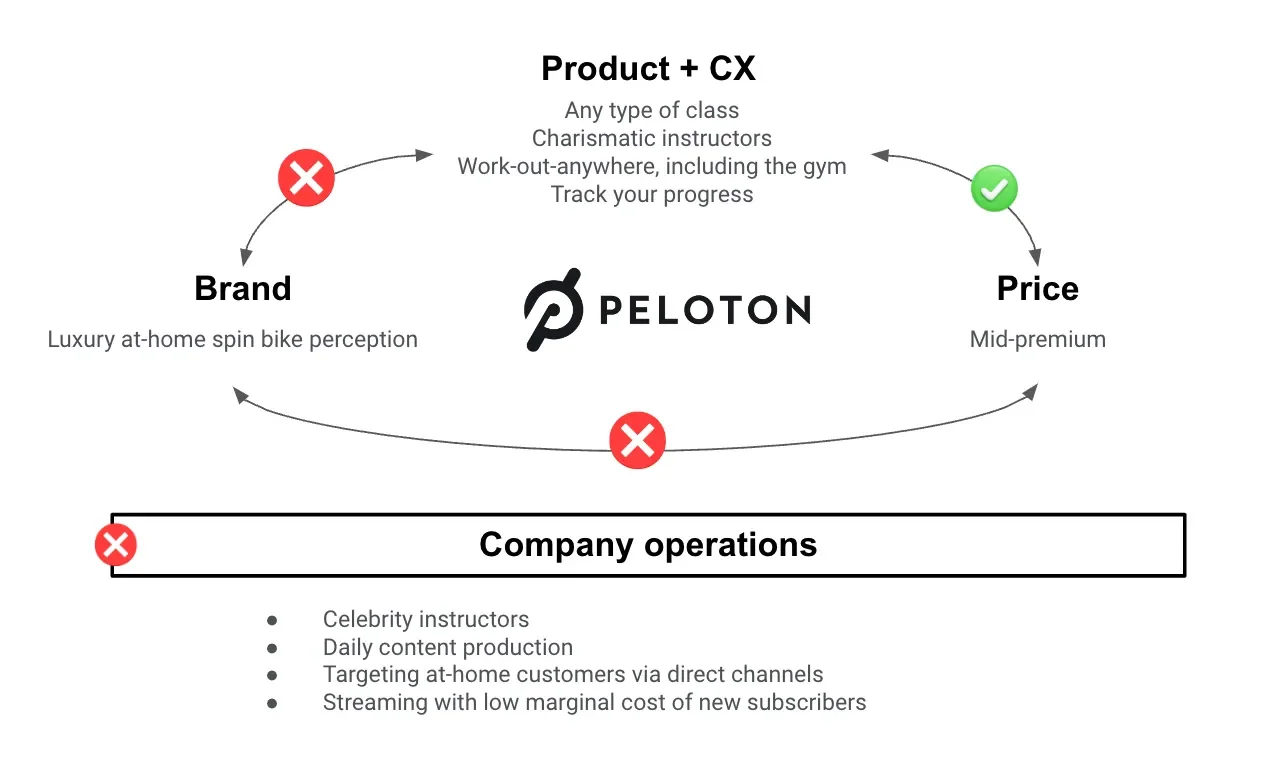
Their actual model is closer to Netflix. You pour money into content and recover it by scaling across millions of people. Mass-market brands can’t act like Hamptons-only clubs.
Barry’s Bootcamp can. Barry’s depends on scarcity. They offer limited time slots, which they charge a premium for. This makes it seem more luxurious. And that is how the Brand Flywheel works. Pelaton on the other end, is doing the complete opposite.
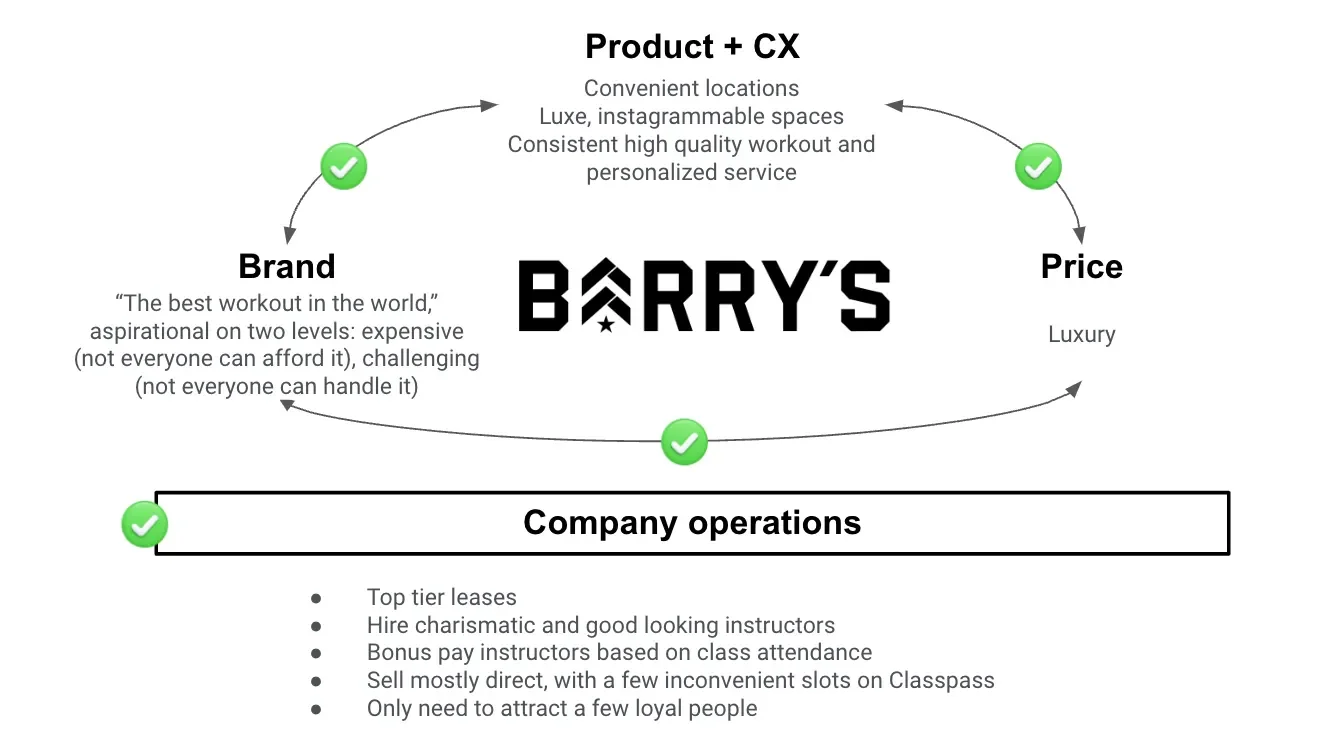
And Peloton’s flywheel? Right now, it needs to get patched up.
The luxury perception problem
Peloton is still seen as a luxury product. But the math does not match that image. The bike costs $1,445, and the all-access subscription is $44 a month. If you were to keep this going for two years, you’d roughly be spending $105 a month for unlimited classes.
That is the equivalent of two and a half Barry’s sessions. The digital-only subscription is $24.99. They offer a premium for exclusivity, while also providing an entry level option at a lower price than Pelaton.
The spin-bike problem
Peloton offers strength, barre, yoga, meditation, boxing, Pilates, rowing, running, stretching. The list keeps growing. The problem is people only think of them as a bike company. The vast majority doesn’t know that they offer other exercise programs.
The at-home stigma
During the COVID lockdowns in 2020, Peloton became the perfect at-home solution. But things began to change once gyms started reopening. Now it became a binary choice: gym person or Peloton person. That binary cuts Peloton off from the exact market most willing to spend on fitness: people who already work out.
Chasing people who don’t already exercise isn’t the most ideal strategy to acquire more customers. That’s like opening up a steakhouse and targeting vegans as your main audience.
The fix is easy. They should stop trying to to be a gym replacement and start positioning themselves as a gym complement.
Nike was able to do this with Nike Training Club because it was never intended to make people stop going to the gym. It was something adjacent to it. Peloton could do the same.
2. Peloton’s marketing challenges
Once you look at Peloton’s Brand Flywheel, the weak points become clear. There are four challenges that stand out most, and all of them are connected to each other.
Challenge 1: Shift perception from luxury to premium
Peloton has already started doing this with more grounded settings and everyday environments. But perception always lags reality. If the world assumes you are a Hermès scarf when you are just a nice J.Crew sweater, you live in the wrong tax bracket.
Challenge 2: Shift perception from spin-only to full fitness
Peloton keeps trying to show breadth with glossy montage ads. Great soundtrack. Great sweat. But “look at everything we have” is not a strategy. It is a list.
Challenge 3: Peloton needs a story
People know the name. They remember the pandemic boom, the memes, the Christmas ad. They do not know why Peloton matters now. Brand energy froze in 2020. A brand without a new narrative becomes cultural background noise.
Challenge 4: Get into gyms
Distribution shapes brand. Peloton only appearing in homes keeps it niche. Peloton showing up in gyms unlocks an entirely new audience. If Moncler could use retail placement to evolve from ski gear to luxury staple, Peloton can use gyms to evolve from “bike company” to full-scale fitness platform.
3. How to solve all four challenges
The first three issues can be solved with a single creative strategy. The fourth is a distribution shift. Combine them and the flywheel starts spinning again.
Campaign idea 1: Mental health is physical health
Most people do not work out for aesthetics. They work out so they do not feel terrible. And the research backs it up. Movement is one of the most reliable ways to improve mental health.
Peloton could own this space. They already have instructors who talk openly about emotional wellbeing. Imagine Peloton standing for “mental health through movement.”
That platform scales across everything the app offers. Yoga, cardio, meditation, running, strength. Instead of “we also have X,” it becomes “we help you feel better, however you want to move.”
Campaign idea 2: Pelostrong
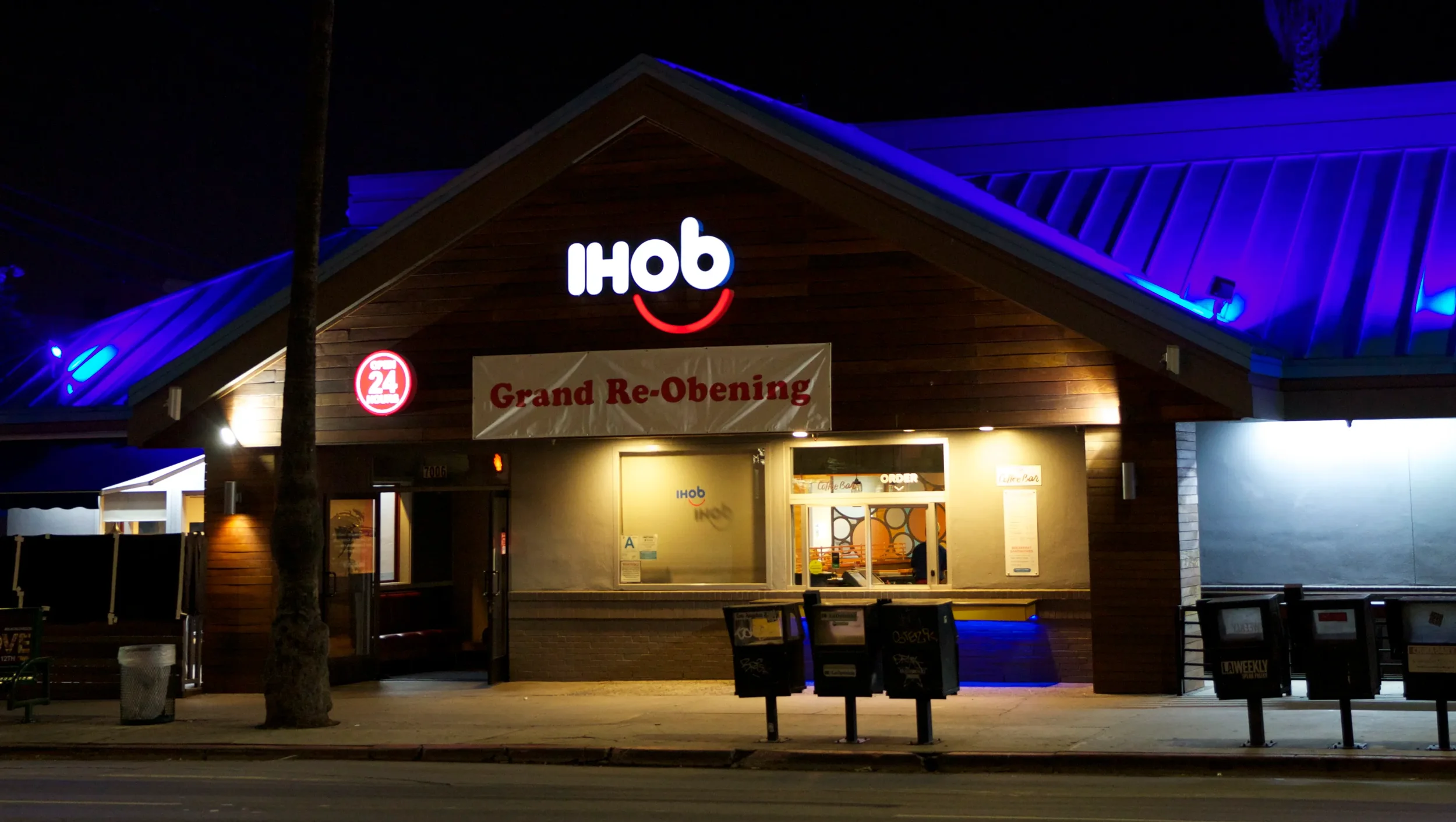
A cheeky stunt can reset perception. If Peloton temporarily rebranded as Pelostrong, it would be ridiculous in the best way. IHOP once changed to IHOB. People laughed. Sales jumped.
Highlight the strength category. Highlight real transformation stories. They exist everywhere, especially on Reddit. Package them. Give Peloton a second cultural wave.
If that feels too loud, split the app into something like “Strong by Peloton.” A clean signal that Peloton is more than cycling.
Distribution idea: Put Peloton inside gyms
Gyms do not want to build content platforms. Peloton does. A hybrid revenue-sharing app solves the problem for both sides. Gyms get stickier members. Peloton gets an audience already paying for fitness.
Even better: if a member leaves the gym but stays with Peloton, the gym still earns a cut of the subscription. Losing a member but keeping recurring revenue? That is an easy pitch.
The path forward
Peloton can move past the pandemic caricature. They can shake off the “bougie bike” reputation. They can become the platform for feeling good through movement.
Not just the Netflix of fitness. The platform that makes sense.
And the answers have been hiding in plain sight. In Reddit posts. In garage-bike ads. In messy living rooms. In the way people actually use the product.
What would you do to turn Peloton around?
